
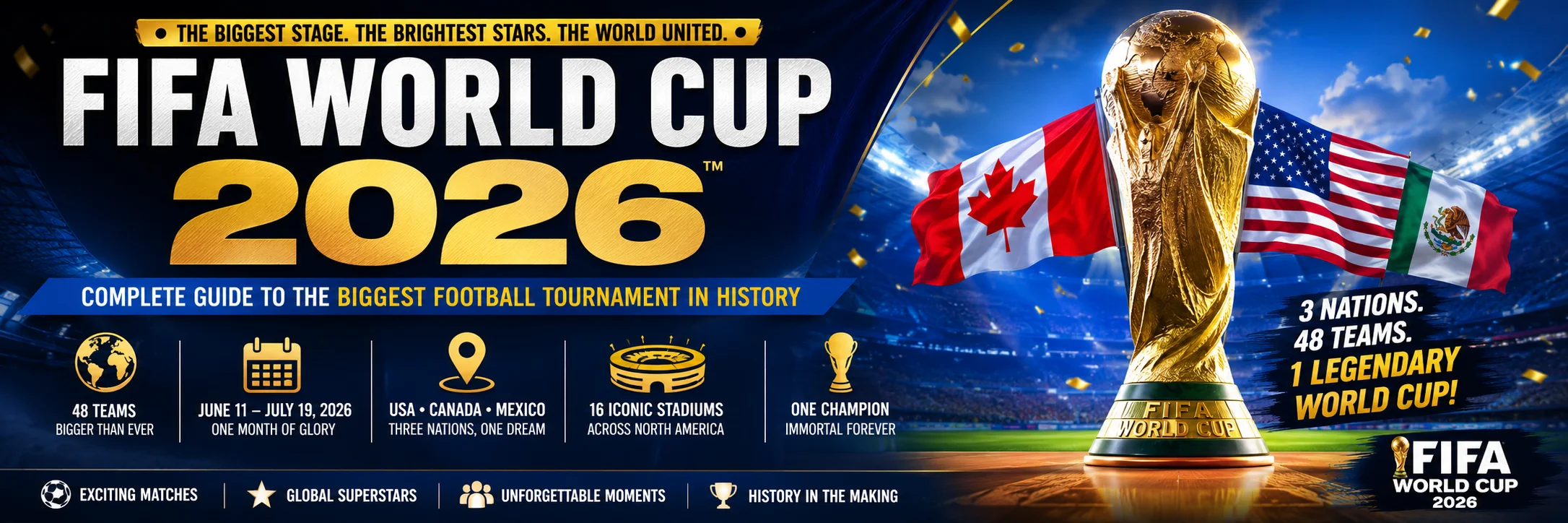
FIFA World Cup 2026: Complete Guide to the Biggest Football Tournament in History
FIFA World Cup 2026: Teams, Format, Schedule, Stadiums & Complete Guide
Discover everything about the FIFA World Cup 2026, including the new 48-team format, host countries, venues, schedule, qualified teams, and tournament history.
FIFA World Cup 2026: Complete Guide Reddy Anna Book
The Reddy Anna Book FIFA World Cup 2026 is set to be the biggest edition of football’s most prestigious tournament. Hosted jointly by the United States, Canada, and Mexico, it marks the first World Cup with 48 teams instead of 32, bringing more nations, more matches, and more excitement than ever before.
With 104 matches, millions of fans, and dozens of world-class stadiums, the tournament is expected to become one of the largest sporting events in history.
What Is the FIFA World Cup?
The FIFA World Cup is the premier international men’s football tournament. Organized every four years by FIFA, it brings together national teams from around the world to compete for the championship.
Since its first edition in 1930, the World Cup has produced unforgettable moments, legendary players, and iconic matches.
FIFA World Cup 2026 Overview
- Tournament: FIFA World Cup 2026
- Hosts: United States, Canada, and Mexico
- Teams: 48
- Matches: 104
- Host Cities: 16
- Organizer: FIFA
This is the first World Cup hosted by three countries and the first to feature 48 participating teams.
Host Countries
United States
The United States hosts the majority of the matches and several world-famous stadiums.
Major cities include:
- New York/New Jersey
- Los Angeles
- Dallas
- Miami
- Seattle
- Atlanta
- Boston
- Houston
- Kansas City
- Philadelphia
- San Francisco Bay Area
Canada
Canada hosts matches in:
- Toronto
- Vancouver
This is Canada’s first time hosting FIFA World Cup matches.
Mexico
Mexico becomes the first nation to host the FIFA World Cup three times.
Host cities include:
- Mexico City
- Guadalajara
- Monterrey
New 48-Team Format
The 2026 tournament introduces a major change.
Previous Format
- 32 teams
- 64 matches
New Format
- 48 teams
- 104 matches
- 12 groups of four teams
The top teams from each group, along with the best third-placed teams, advance to the knockout stage.
This gives more countries an opportunity to compete while increasing the number of high-quality matches.
Why Was the Tournament Expanded?
FIFA expanded the tournament to:
- Increase global participation
- Give emerging football nations more opportunities
- Grow football worldwide
- Create more competitive matches
- Increase fan engagement
Tournament Structure
Group Stage
The competition begins with 12 groups.
Each team plays three matches.
Points system:
- Win: 3 points
- Draw: 1 point
- Loss: 0 points
The best-performing teams advance.
Knockout Stage
The knockout phase includes:
- Round of 32
- Round of 16
- Quarter-finals
- Semi-finals
- Third-place playoff
- Final
Every knockout match must produce a winner.
Qualified Teams
Qualification is based on continental competitions.
Confederations include:
- AFC (Asia)
- CAF (Africa)
- CONCACAF
- CONMEBOL
- OFC
- UEFA
The expanded format allows more nations from every confederation to qualify.
Why the 2026 World Cup Is Historic
Several milestones make this edition unique:
- First 48-team World Cup
- First three-country host
- Largest number of matches
- Largest World Cup in history
- Millions of expected visitors
- Significant investment in football infrastructure
Stadium Experience
Fans can expect:
- Modern stadiums
- Advanced technology
- Improved fan services
- Enhanced security
- Better transportation
- Interactive digital experiences
Technology at the Tournament
Technology continues to play a major role.
Key innovations include:
- VAR
- Goal-line technology
- Semi-automated offside technology
- High-definition broadcasting
- Real-time match statistics
These systems aim to improve fairness and the viewing experience.
Economic Impact
The tournament is expected to generate:
- Tourism growth
- Employment opportunities
- Infrastructure improvements
- Increased spending on hospitality and transport
- Long-term investment in football development
Fans Around the World
The FIFA World Cup is watched by billions of viewers.
Fans participate by:
- Watching live broadcasts
- Following team news
- Discussing matches online
- Supporting their national teams
- Attending fan festivals
The 2026 edition is expected to set new audience records.
Looking Ahead
The FIFA World Cup 2026 represents a new era for international football. With more teams, more matches, and three host nations working together, the tournament aims to celebrate the global popularity of the sport.
Whether you support a traditional football powerhouse or an emerging nation, the expanded competition promises more opportunities for memorable performances and exciting stories.